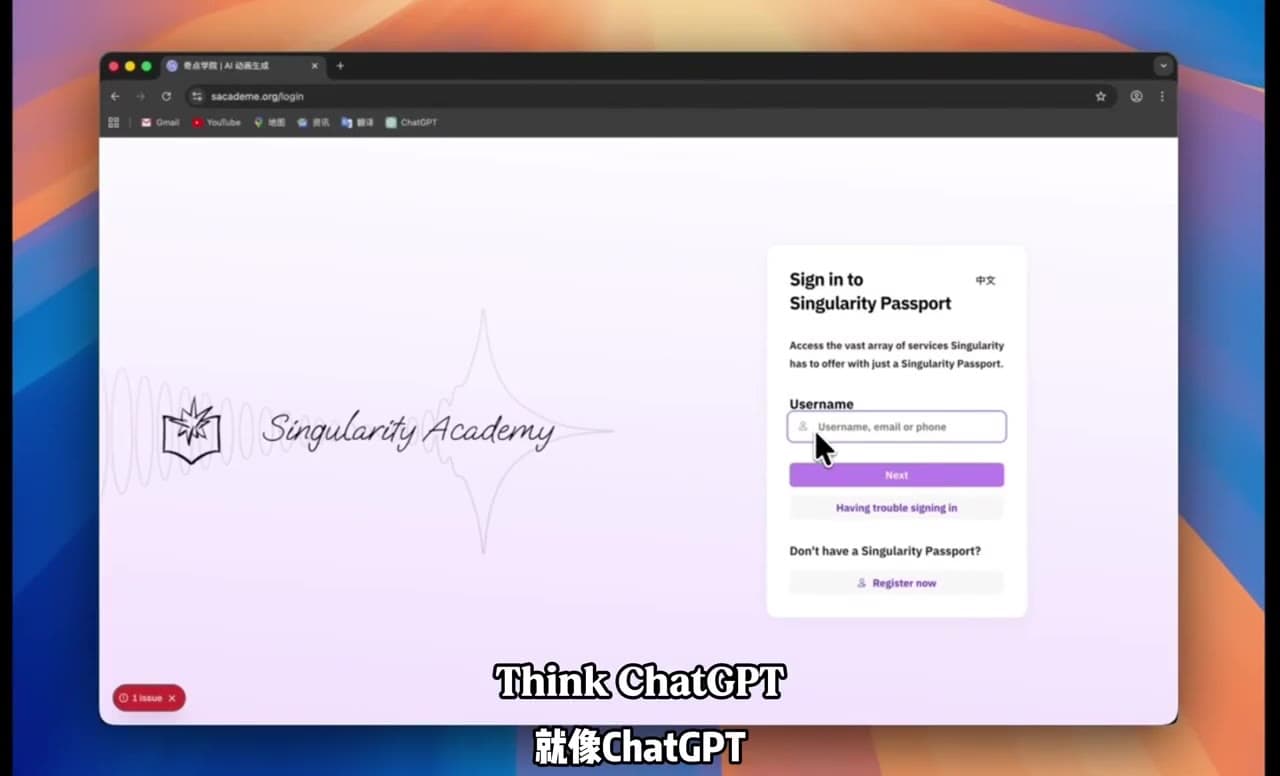
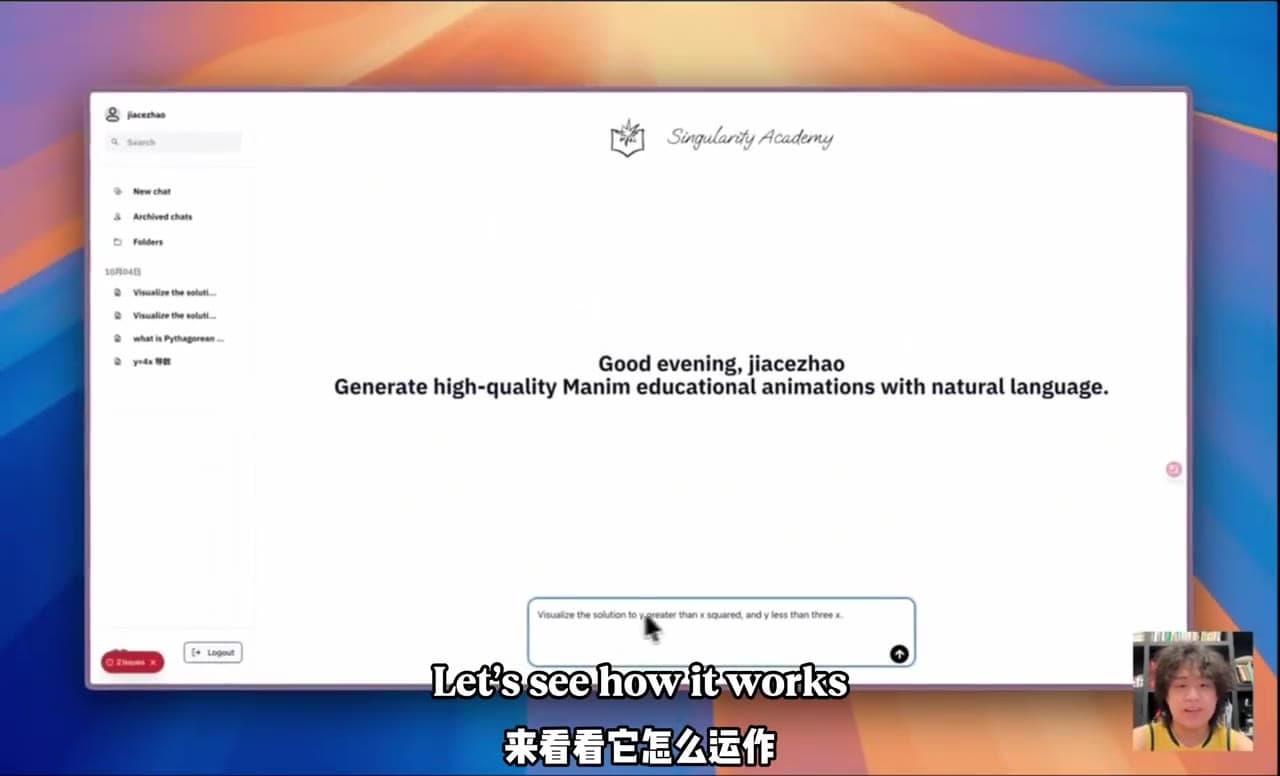
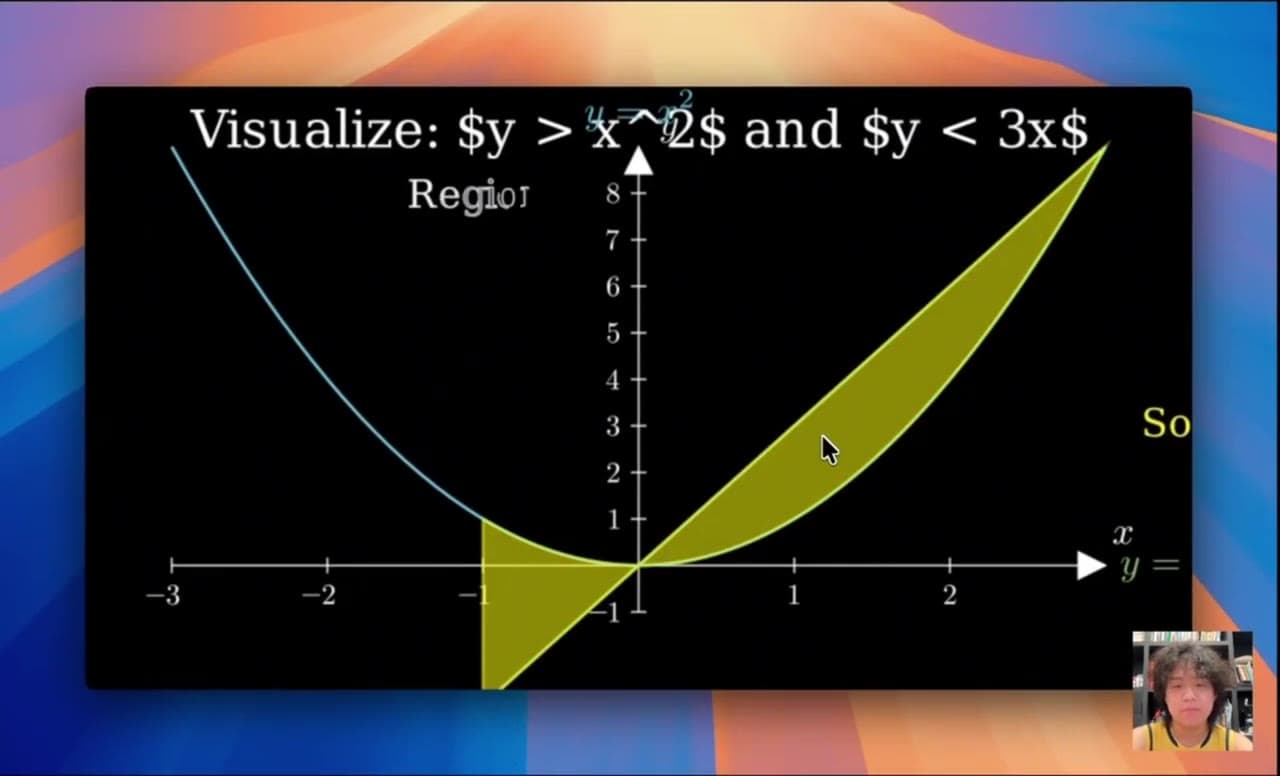
sacademe.org explores how generative systems can move beyond static answers and construct visual, interactive explanations around difficult concepts.
I work across product definition, AI behavior, front-end implementation, and the structure of the learning experience.
Architecture
A multi-agent pipeline, not one big prompt
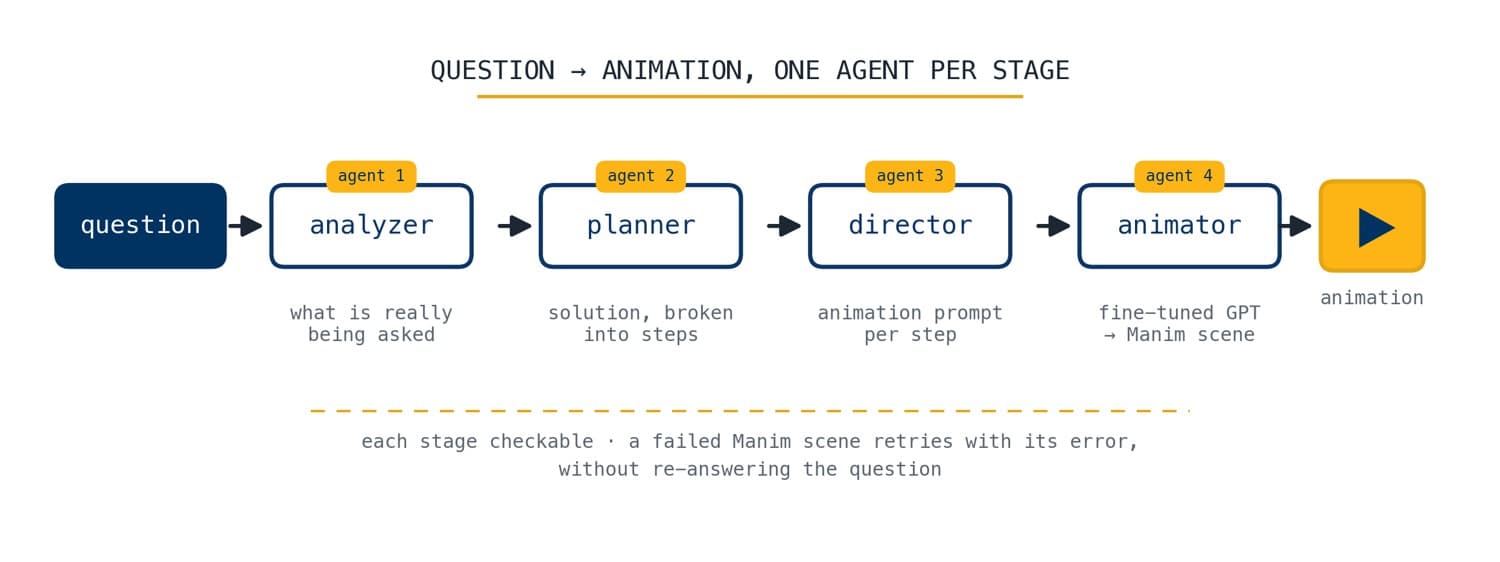
Asking a single model to go straight from a student's question to a finished animation fails in predictable ways: it skips steps, animates the wrong thing, or writes Manim code that doesn't run. So the system is built as a pipeline of specialized agents, each doing one job it can be checked on.
An analyzer agent reads the question first and works out what is actually being asked — the underlying concept, the student's likely level, and what a visual explanation needs to show. A planner agent then turns that analysis into an ordered solution: the discrete steps a student would follow to solve the problem themselves.
For every step in the plan, a director agent writes an animation prompt — what appears on screen, what moves, what gets highlighted. Only then does the fine-tuned GPT take over, converting each prompt into a runnable Manim scene. The steps render into one continuous animation that walks through the solution in the same order a teacher would.
Question → animation, one agent per stage
question
  → [analyzer]  what is really being asked
  → [planner]   solution, broken into steps
  → [director]  animation prompt per step
  → [animator]  fine-tuned GPT → Manim scene
Why agents
Small jobs fail loudly, big prompts fail quietly
Splitting the work keeps every failure visible and recoverable: a bad plan can be regenerated without touching the animation stage, and a Manim scene that fails to compile retries with its error message — without re-answering the question. It also lets the fine-tuned model stay narrow: it only ever has to be good at one thing, turning a precise animation prompt into correct Manim code.